Stream Processing is a data architecture designed to handle unbounded data streams (information that is generated continuously and never truely ends).
It is the engine behind modern, reactive applications. When you receive a real-time fraud alert from your bank, see a live-updating dashboard of system metrics, or interact with an AI chatbot that adjusts its context based on your last message, you are witnessing stream processing in action.
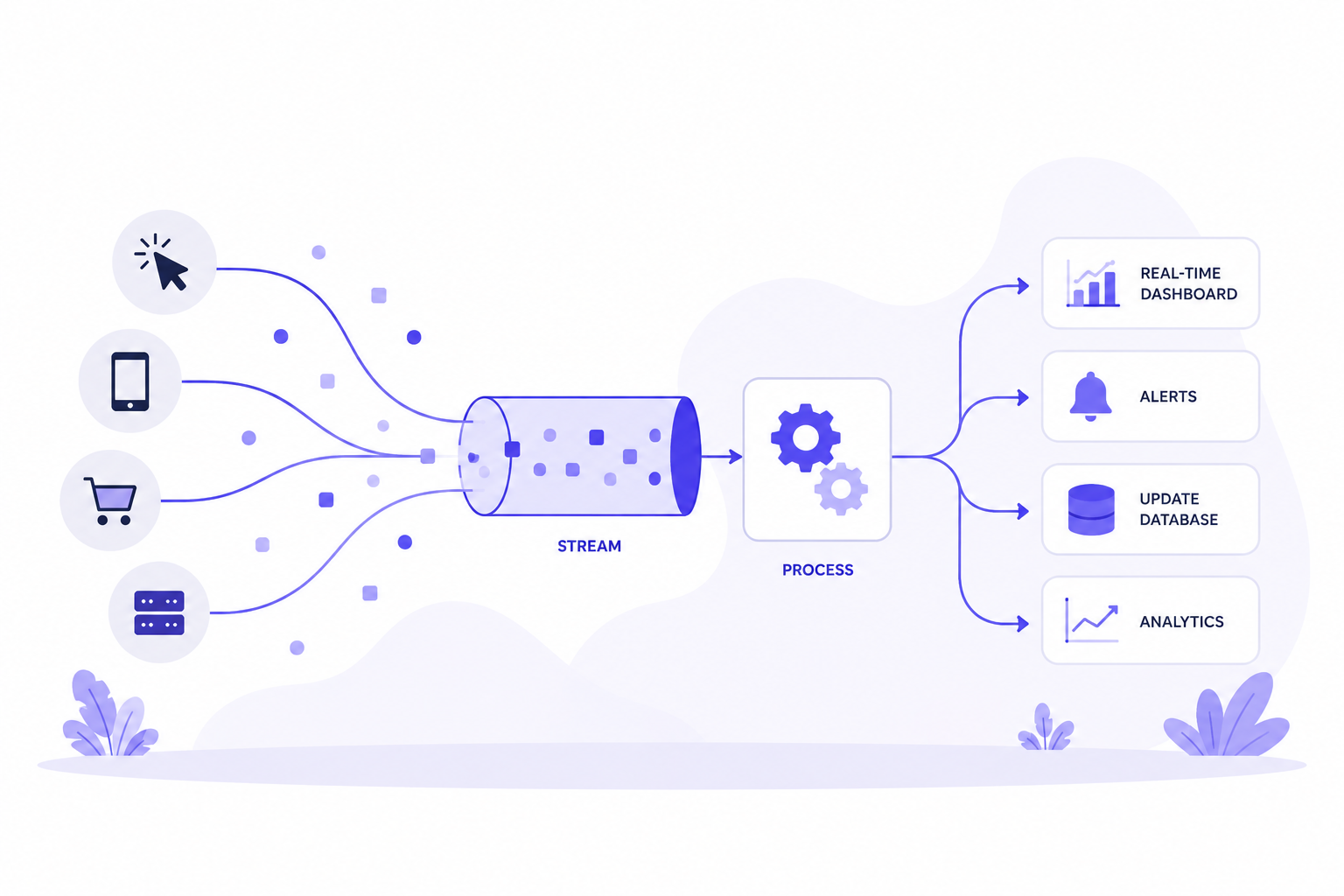
The Fundamental Problem: Batch vs. Reality
Traditional batch processing treats data as a fixed, finite set. Because batch systems need to know when a task is finished, they must wait for the entire dataset to be ready before they can process it (for example, sorting all records to find the lowest one).
To handle continuous data in a batch model, we have to artificially slice it into time chunks (e.g., "processing an hour's worth of data at the end of every hour"). This creates two major issues:
-
Stale Data: Information is only updated when the next batch runs, which is often too slow for modern, "impatient" users.
-
Inefficiency: Constantly polling a database for new data creates significant overhead and wasted resources.
The Stream Processing Solution
Stream processing abandons these artificial time slices in favor of a continuous flow. Instead of waiting for a batch to finish, the system processes each event the moment it is generated.
Rather than a system asking the database "Are there any new updates?" (polling), the system is designed to be notified the instant an event happens (pushing).
Understanding Common Use Cases
Here are a few common real-world use cases for stream processing:
-
Fraud Detection and Security: Financial systems need to analyze transaction patterns (location, spending velocity, device ID) in real-time. If a card is used in Delhi and then in New York 10 minutes later, the stream processor triggers an instant decline.
-
Real-Time Personalization: As you browse an e-commerce site, the stream processor tracks your clicks. If you view three pairs of running shoes, the site updates the "Recommended for You" section to display running accessories before you navigate to the next page.
-
Log Aggregation and Observability: DevOps teams stream logs and metrics (CPU, memory, error rates) from thousands of microservices into a dashboard. If the error rate for a specific service spikes, the stream processor sends an alert immediately.
How Stream Processing Works?
Stream processing operates using a messaging system that continuously moves data from producers to consumers in real time, without waiting for the data to be stored in traditional databases or files first.